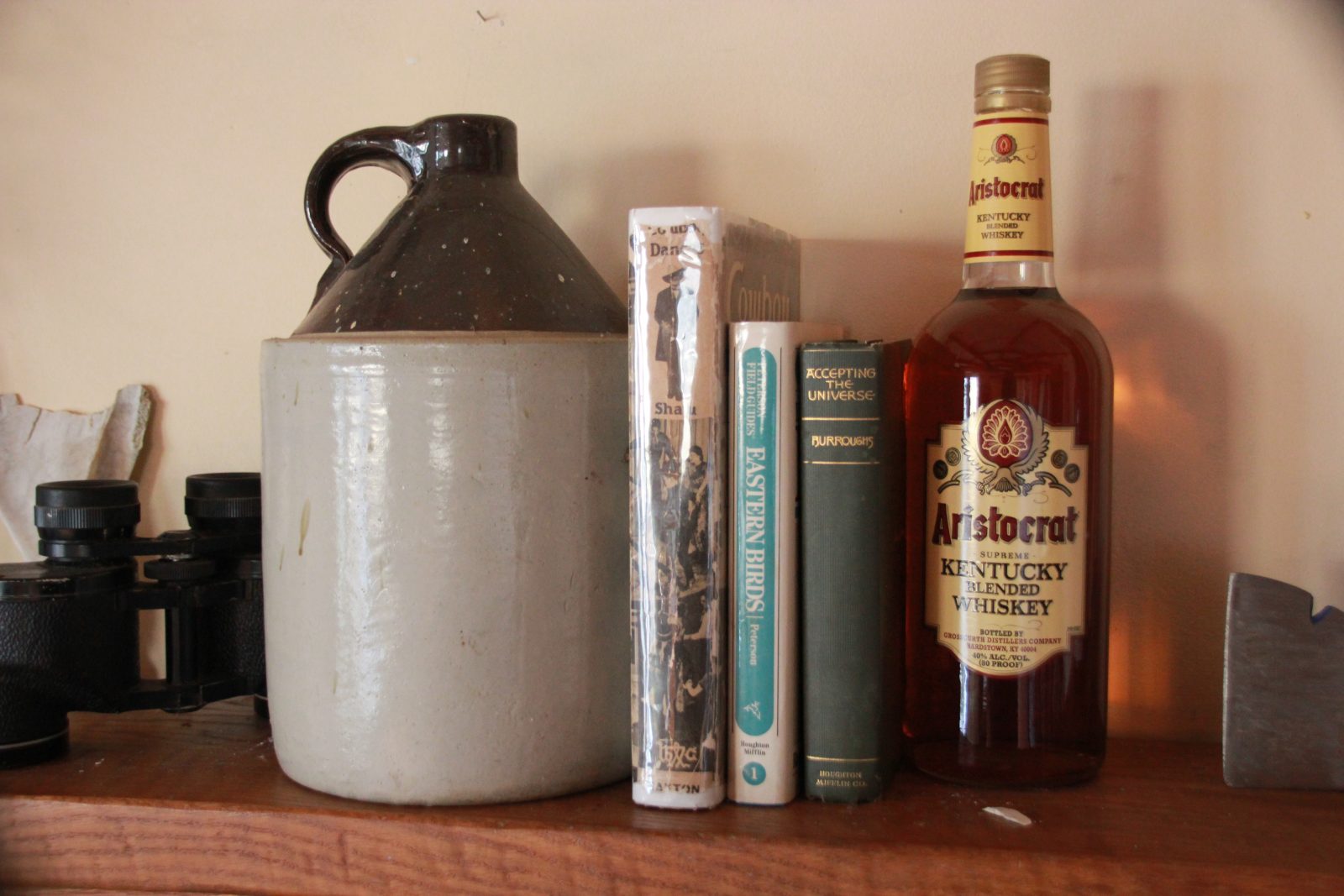
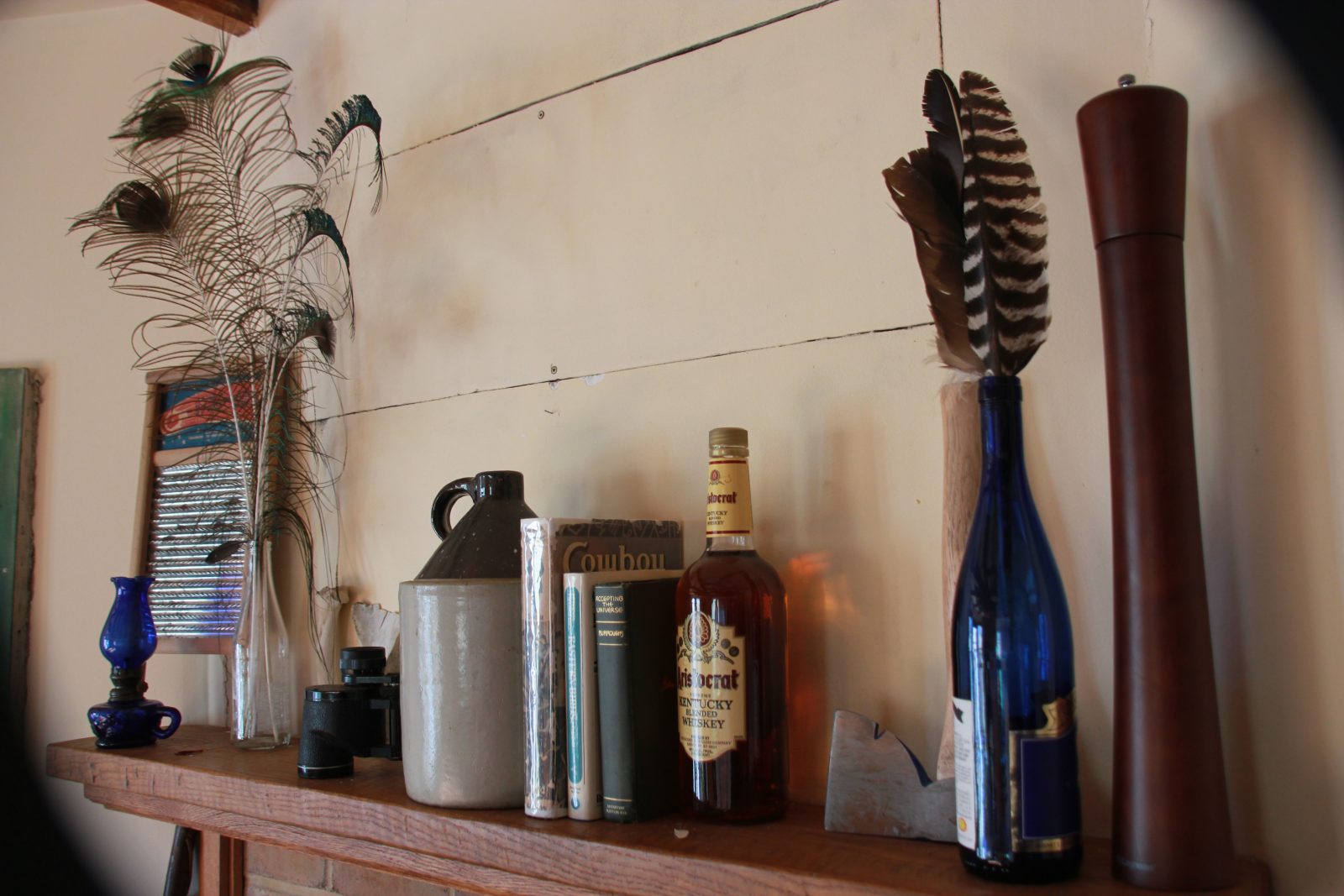
It’s rare for me to start a book and not finish it. I don’t know if it’s virtue or vice, but once I’ve started reading, I generally plow through to the end, no matter how bad the book. I guess I always hope for a payoff at the end, even if it seems unlikely. But this time, I just couldn’t do it. Two hundred pages into The Making of Ireland, I had to stop. I just couldn’t go any further.
I don’t know if it’s a “bad” book, necessarily. It’s incredibly thorough, very well researched, and remarkably detailed about those parts of Irish history over which most other books quickly skip. Where other books skate from the druids to the first English settlement in a chapter or so, The Making of Ireland spends hundreds of pages on it. The problem is that the attention to detail is mostly just attention to names, dates, and battles. Frankly, I didn’t know that anybody wrote that kind of history anymore. It’s exactly what I was trained not to do in my graduate history classes. There’s virtually no analysis, no social context, no thematic connecting of events. Just a massive litany of who fought whom on what battlefield in which year, who got appointed to which political office, and how many heads of cattle were seized by which governor. It’s all What and no Why. It’s not even really the trap of Whig history; it’s more like reading an almanac or encyclopedia.
In contrast, Ireland Now is an absolutely fascinating slice of modern life on the Island. To be fair, it’s more sociology than history, but the quality of the storytelling is also vastly better. Ireland Now avoids the clichés of mystical Ireland, English-oppressed Ireland, Celtic tiger Ireland. Instead, it tells its stories by way of case studies. It answers the question “What is rural life like in modern Ireland?” not solely by statistics and dates (although it uses those, too), but primarily by interviewing Irish farmers and letting them tell their stories. It does the same for immigrant Ireland, Irish musicians, and the Irish clergy. The end result is a portrait painted by the subjects themselves, with the connections made less by the author’s words than by the sequencing and the editing of the first-person stories.
For me of course, the most interesting chapter was the one on Irish music. Flanagan skips right past generalizations about tradition and authenticity — notions over which trad musicians often get themselves into a huff — and bravely takes Riverdance by the horns right out of the gate. Traditional musicians sneer at the mention of it, and yet it continues to sell out shows all over the world. It’s the elephant in the room that nobody wants to talk about. What do you do with Riverdance?
I was talking to a music sociologist friend of mine about what he has heard described as “the set list from hell”. The set list from hell is that set of songs or tunes that have become so successful as to be known by people outside the musical subculture, but which no self-respecting musician inside the subculture still plays. So, “Danny Boy” for Irish musicians, “Rocky Top” and “Dueling Banjos” for bluegrassers, “Freebird” or “Stairway to Heaven” for rock musicians. It’s not that any of those are bad songs; on the contrary, they are fine songs — good songs, even. But they’re so well-tread and so oft-requested by the punters that you can’t play them without slipping into parody. The purists just won’t do it.
And yet, you can’t talk about the Irish music diaspora and ignore Riverdance. When we say the phrase “traditional Irish music and dance”, the first image in the minds of most people in the world will be Michael Flatly in a mullet and tight pants prancing about in a multi-million-dollar stage show. (Skip ahead to 4:46 to see what Irish step dance would have looked like if it had been birthed in Las Vegas.) There’s almost nothing “traditional” or “authentic” about the production, but because of it, Irish step dance classes were full for years throughout the world. Whether the purists like it or not, it becomes part of the tradition, part of the storytelling. Traditions are living things, and the stories are never over and are constantly being written and revised. Ireland Now does a fine job of telling some of those stories, while The Making of Ireland mothballs them and renders them dead things.
I flew into Italy last week without a book, the idea being 1) not to carry anything extra and heavy and 2) to force myself to study vocabulary during my reading time. That worked well enough; I reviewed my phrase book during the flight, and while I certainly don’t speak Italian, I was at least able to get around OK, stay fed and sheltered, and have a good time in the process. For the flight home, however, I would need brain fuel. So, in Florence, I set out to find an English language bookstore.
As it happened, there was one near the home of a certain Dante Alighieri, a couple of blocks from the chapel where he first laid eyes on his beloved Beatrice and where Beatrice lies entombed to this day, receiving the prayers of stricken lovers with a pure and reproachless heart. I had my own mystical experience with Beatrice at the chapel (a story for another day), which prompted me to track down La DivinaCommedia at the bookstore shortly thereafter.
It’s of course grossly unfair to read Dante in English and make any assessment of the quality of the language. So I won’t. Having read The Inferno years ago, it wasn’t until I read The Purgatory on trains and buses across Tuscany and Umbria that I started to see what Dante was up to. Not just language, although I expect that shines as well, and not just an epic allegory, although it’s that, too. What first struck me was the painstaking attention to structure and symmetry — the structure of the cantos laid out with numerological significance, each of the three books (the trinity) ending with the same word (stars), the mirroring of each of the cardinal sins with a corresponding beatitude, ad infinitum. The Divine Comedy isn’t just an epic, but a clockwork machine, a catalog of antiquity, a political treatise and the shaping of modern Catholic thought. It’s poetry of such a completely different character than that of impressionistic lines dashed in a beat café. Dante is no mere poet — he’s an astronomer, a theologian, an historian, a politician, a bibliophile and perhaps above all else, a lover, loyal beyond marriage, loyal even beyond death. As when I read so many other great writers, I am utterly humbled to understand even a portion of what’s he’s up to. It’s like seeing a watchmaker create a timepiece from ore and sand — it seems impossible, but the product is undeniably real.
I’m not typically one for nostalgia, and I’m particularly unsympathetic to 80s musical nostalgia. Folks, the 80s were not a good time for music. Vacuum tubes gave way to transistors and spawned a million horrible sounding guitars. Cheap commodity synths made it possible for every kid who ever took a piano class to be a rock star. (Keytar, anyone?) The Michael Jacksons of the world turned the Motown sound into watered-down bubblegum pop. Aside from east bay punk and harDCore, there’s not much music from the 1980s that interests me much. I don’t want to relive the Debbie Gibson and Tiffany era, thank you.
But then, one night in the early 1990s, watching late night television, I received a broadcast from 1982:
Undeniably 1980s. Crazy analog drum machines. Guys in dark suits playing keyboards. Crappy transistor-filtered guitar. But somehow blended with spaghetti western themes and narratives and turned into something else altogether. So I checked out The Index Masters, which included the original 1980 Wall of Voodoo EP and a bunch of previously unreleased live material. A totally deadpanned version of Johnny Cash’s “Ring of Fire”. Covers of the theme songs from “Hang ‘Em High” and “The Good, the Bad, and the Ugly”. The industry shrugged and called it New Wave, which was early 80s short-hand for “What the hell is this supposed to be?”
The Talking Heads they are not. If Wikipedia can be believed, Wall of Voodoo was born from Acme Soundtracks, an attempt by Stan Ridgeway to make money writing film music. A failed attempt at writing film music. It’s hard to imagine what sort of films Wall of Voodoo would have fit into. “Cowboys vs. Robots: The Musical” maybe? There’s a genre there still waiting to be exploited. (Or, crap, maybe Will Smith already did that.) I don’t know why it works. It’s like Wall of Voodoo tried to be kitsch, but they were just too weird to succeed at it, so they ended up something else. Something spooky and good.
Now, by the force of circumstance
And by the belt that holds up my pants
I’m held responsible
For this idea that never had a chance
I did some backpacking on the AT this weekend between Daleville and Catawba. A paltry 20 miles and I covered it a lot faster than I meant to, and so ended up with some time to kill up on McAfee Knob. I set my bag down to make my morning coffee, and realized I had set it down right next to this beauty. I initially thought whoa, snake! and then noticed the head and thought SHIT! COPPERHEAD! Fortunately, she didn’t seem too upset by it, and I went back to my breakfast and she to her sunbathing. Thanks for being laid back, babe.
I didn’t take too many pictures during the hike, but the ones that I did take are here.
It probably doesn’t speak well for Count Zero that I was two chapters into it before I realized that I had read it before. Not just read something like it, but actually ready the book, some unknown number of years ago. It can be hard to tell with genre fiction, because by definition it’s all pretty similar. I finished it anyway, and figured that while I was at it, I might as well finish the trilogy and read Mona Lisa Overdrive, too. Because I’m the kind of guy who aims to finish things once I’ve started them.
You can’t really talk badly about Gibson’s Sprawl Trilogy for being genre fiction. If it didn’t invent the cyberpunk genre, it certainly defined it. A lot of our “cyberspace” terminology — and even some of the technologies themselves — were fictions created by Gibson that became realities created by Gibson readers. That’s no small feat for a writer. To inspire not just a literary genre, but a whole way of interacting with information in the real world. He created a whole different kind of “cool”, where pasty-faced loners are “cowboys” and the data they manipulate is frontier. Emmanuel Goldstein as Billy the Kid. An impossible coup.
Even after all this time, data wrangling is still fascinating to me. Since my father brought home the first Pong machine and attached it to the antenna of our black-and-white TV, I’ve been pretty hooked on digital world-making. When the ATARI 2600 got replaced with the ATARI 800XL home computer (with BASIC built-in), I started spending my study hall hours in the library reading Family Computing and writing INFOCOM-style text adventure games long-hand in a spiral notebook. They were terrible programs: hugely redundant labyrinths of IFs and GOTOs. But something about it was amazing to me. It still is, but I still don’t know what it is.
It probably has something to do with solving problems in finite spaces. I was a nerd, no doubt about it. Solving problems in people spaces wasn’t something I had learned to do. Too many variables, too difficult to reproduce results. The space wasn’t sufficiently constrained. But finite computer space was different. The same inputs created the same output every time. If you tried, you could understand and control the system — the whole system, consistently. It was a problem-solver’s dream: define the constraints, PEEK and POKE at some memory bits, and you got exactly what you wanted.
Luckily for me, I was forced to live without a computer for most of my teenage years. The 800XL went belly-up and wasn’t replaced, I couldn’t afford a computer of my own until my junior year of college, and I was forced to work on other skills. Messier skills like art and music and finally people. The ATARI years served me well, though. I’ve been data wrangling for all of my adult life, and make a comfortable living staying at home and pushing ones and zeroes into the tubes. Without Gibson, those tubes would surely still exist, but they would have been shaped differently.